Why it matters
The signal is in the rock. You just have to see it.
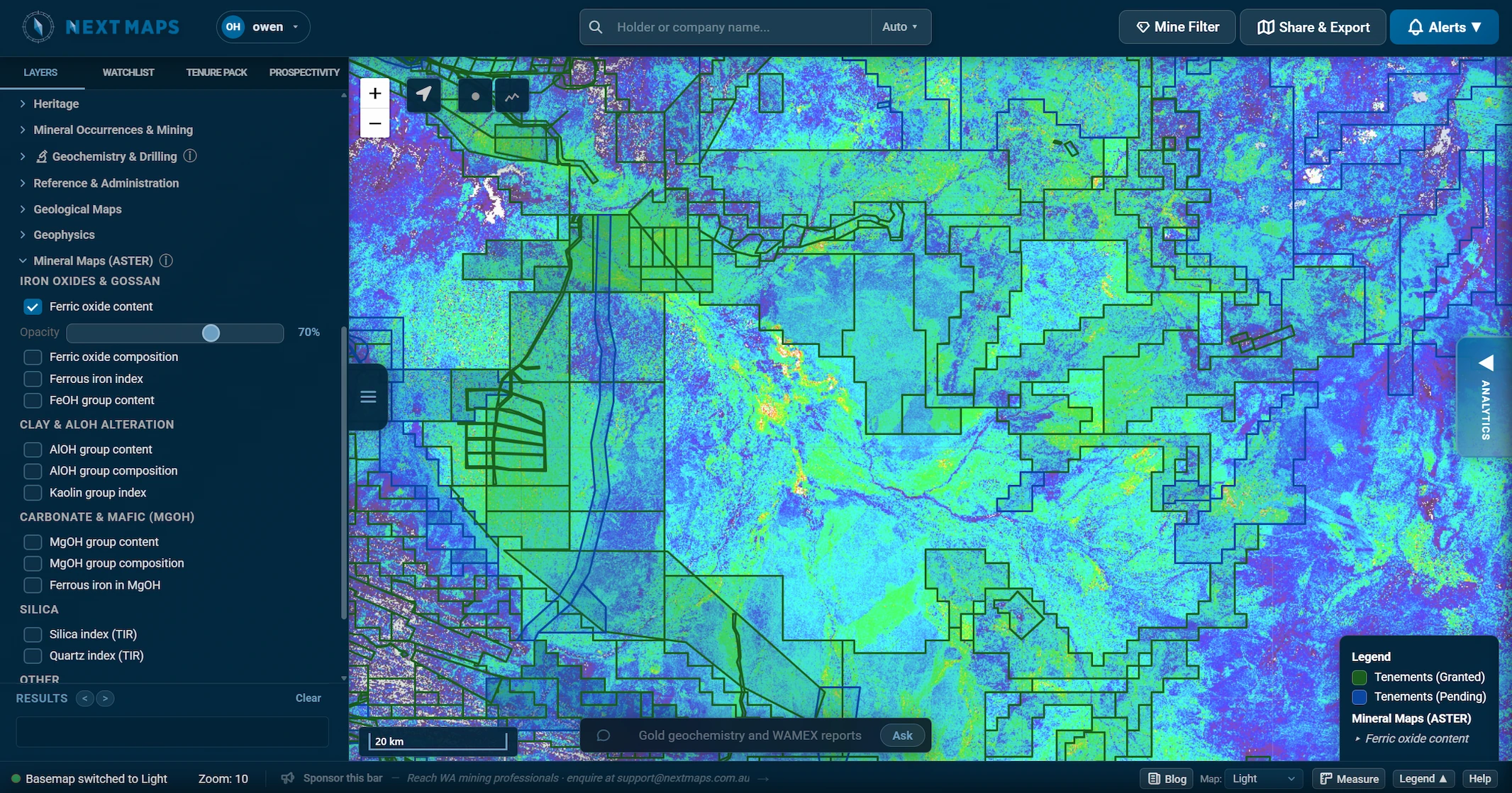
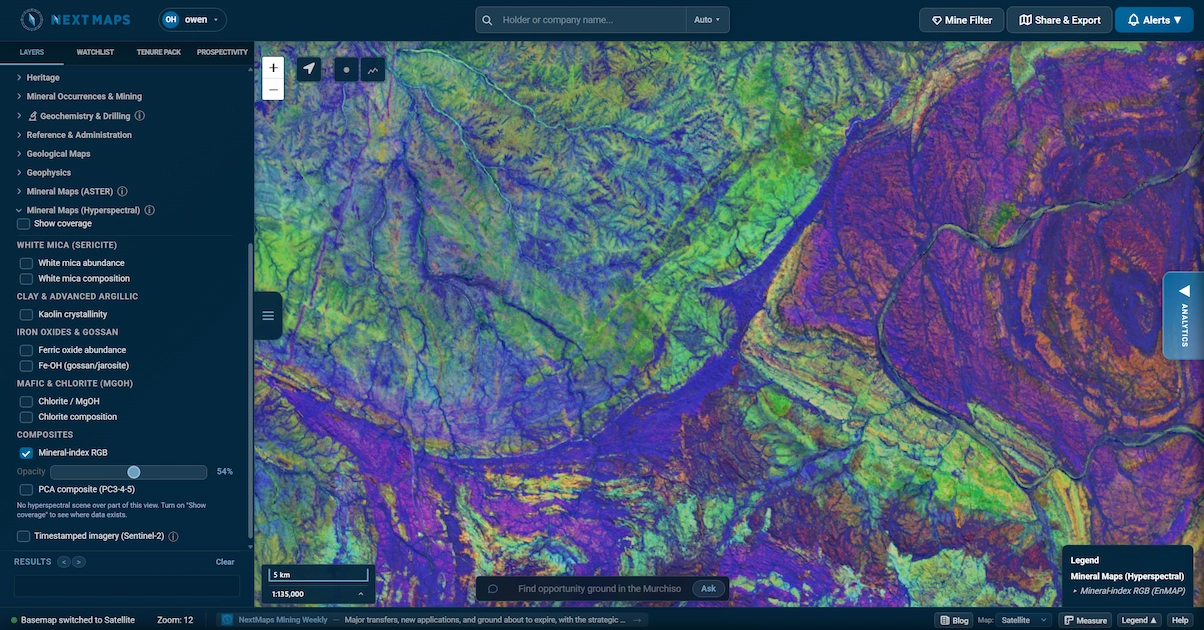
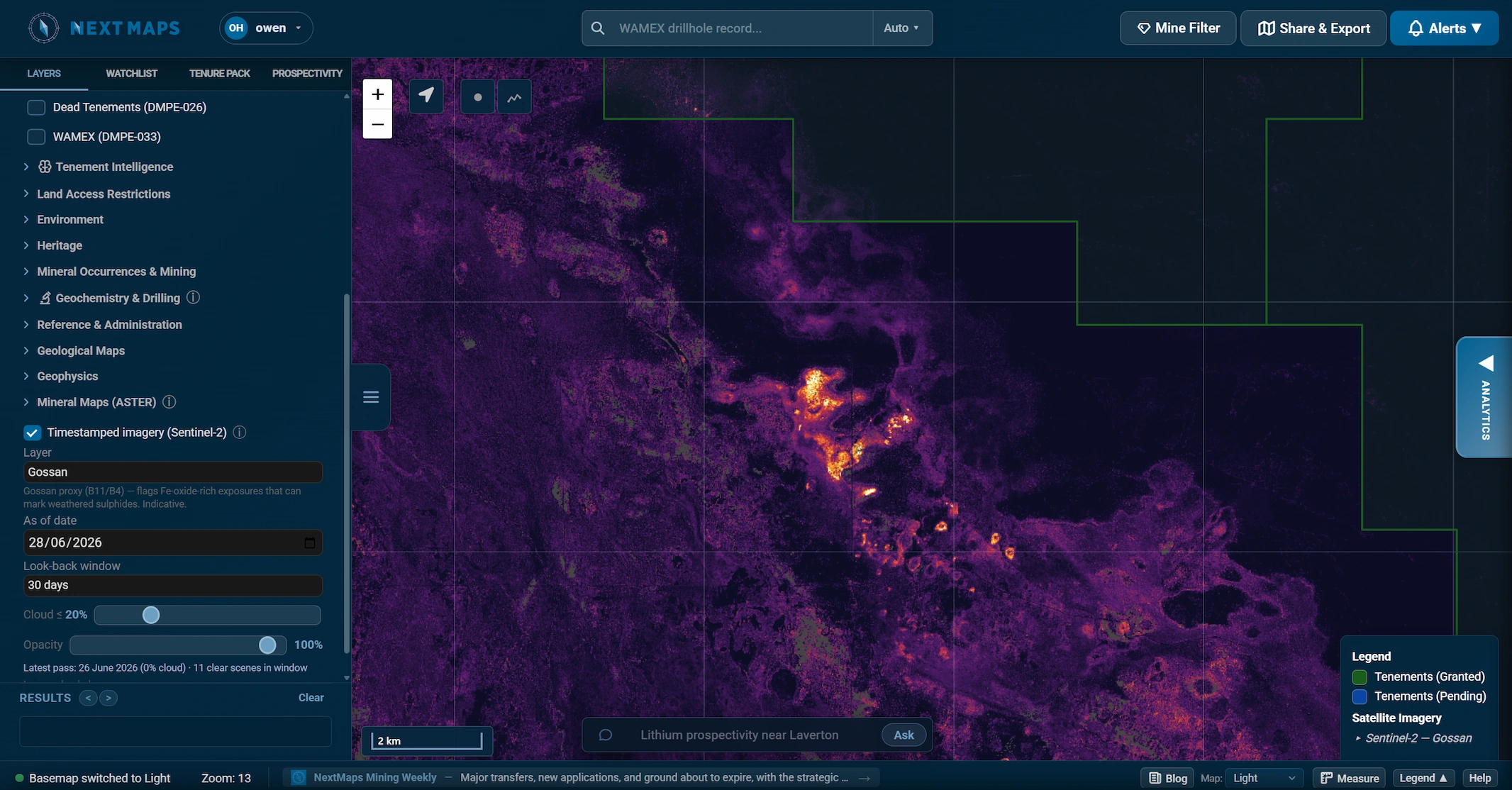
Alteration haloes, iron staining and clay caps are some of the clearest vectors toward mineralisation, and the spectral data to map them is public. The catch has always been the workflow: finding the right scenes, downloading gigabytes of imagery, loading it into a GIS, and writing the band-ratio expressions before you can even look. NextMaps does that work for you and puts the result on the same map as your tenure, geology and Tenement Intelligence.
These layers are pathfinders, not truth. A gossan ratio flags an iron-oxide spectral response, not a confirmed gossan, and vegetation and water are masked so they cannot masquerade as signal. Used the way a geologist actually works, regional ASTER to narrow the search, EnMAP hyperspectral to resolve the mineral species, and dated Sentinel-2 to zoom in, they point you at the ground worth a closer look, then a Prospectivity Data Room reads the WAMEX history behind it.
Credit where it is due: Grant Boxer's excellent QGIS resource (grantboxer.github.io/QGIS.html) first introduced us to these ASTER and Sentinel-2 band-ratio methods. All we have done is bring them into NextMaps so you can run them in a couple of clicks instead of building the workflow yourself.